Our AI discovery process
Most AI projects fail from picking the wrong problem, not the wrong model. How our discovery finds a first project worth building.


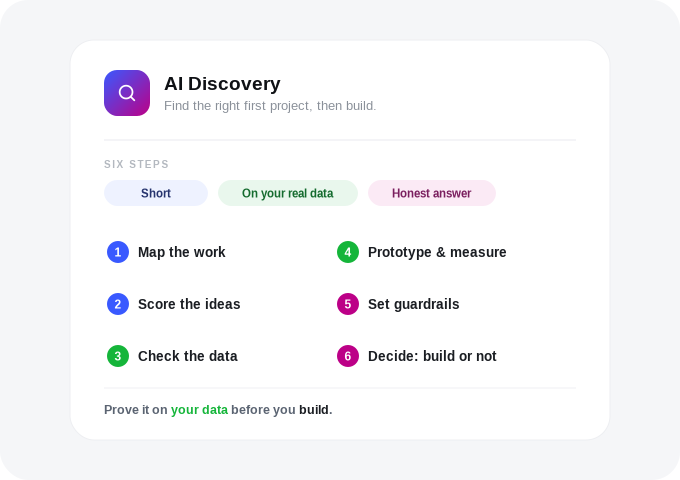
Most AI projects that disappoint don't fail because of the model. They fail because they picked the wrong problem — something too vague to measure, too risky to automate, or too rare to be worth the effort. Discovery is how we avoid that. It's a short, structured phase that answers one question before any real money is spent: where will AI genuinely make a difference in this business?
Step 1: Map the work
We start with people, not technology. We talk to the team doing the work and ask simple questions. Where does the time go? What's repetitive? What gets delayed because someone is buried in admin? Where do errors creep in?
The goal is a clear picture of the work as it really happens — the inboxes, spreadsheets, handovers and workarounds — not as the process document says it happens.
Step 2: Score the opportunities
Usually we come out of step one with more ideas than anyone can build. So we score each one against a few practical tests:
- Volume: does this happen often enough that saving time matters?
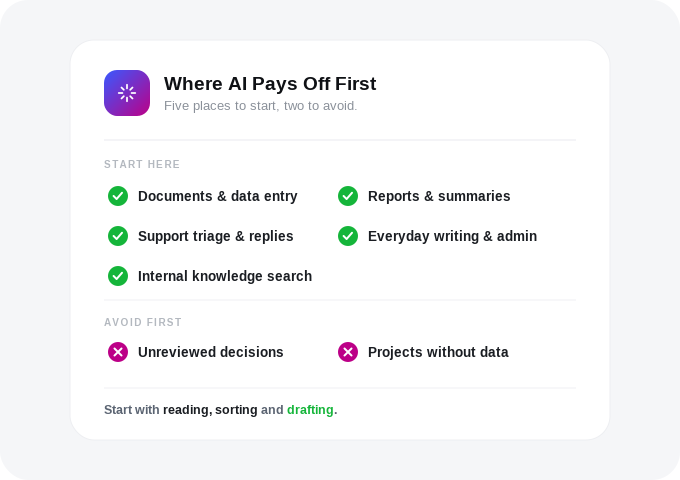
- Judgement: is it mostly reading, sorting and drafting — the things Claude does well — rather than high-stakes decisions?
- Data: can we actually get to the information the task needs?
- Risk: what happens if the AI gets it wrong, and can a person easily catch it?
- Measurability: can we tell, with numbers, whether it worked?
The best first projects score well on all five. They're rarely the most exciting idea on the list — and that's fine.
Step 3: Check the data
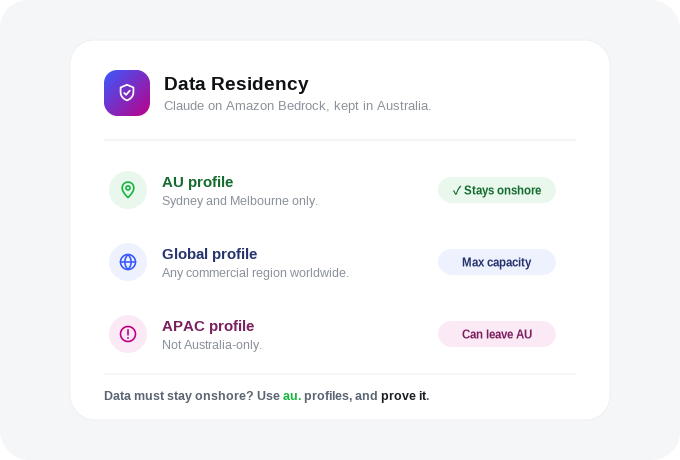
Before going further, we look closely at the data the shortlisted ideas depend on. Where does it live? Who can access it? How clean is it? Does it include personal information, and does it need to stay in Australia? These answers shape the architecture, and finding them early prevents expensive surprises later.
Step 4: Prototype on real examples
This is the step that makes discovery worth doing. Rather than guessing whether AI will work, we test it. We take a set of real examples from your business — real emails, real documents, real tickets — and run them through a Claude prototype. Then we measure the results honestly: how often was it right, where did it struggle, and what would a person still need to check?
A prototype on real data tells you more in days than a month of slide decks.
Step 5: Define success and guardrails
Once we know what works, we agree what success looks like in numbers: hours saved, turnaround time, error rate. We also set the guardrails — where a person reviews or approves, what data the AI can and can't see, and what the running cost is likely to be each month.
Step 6: Decide
Discovery ends with a clear recommendation, and it isn't always "build". Sometimes the answer is to adjust the idea, start smaller, or tackle a different problem first. Occasionally it's that AI isn't the right tool yet. An honest "not this one" is a far better outcome than a project that quietly fails six months in.
What you walk away with
- A ranked shortlist of AI opportunities in your business.
- Prototype results on your own data, with real accuracy numbers.
- A proposed architecture, including how your data is handled and protected.
- An estimate of build effort and monthly running cost.
- A plan for the first build, with success measures agreed upfront.
Start with the right problem
Discovery is the first step in how we take every project from idea to operation — discover, design, build, harden, launch and operate. It's short by design, because the aim isn't to study AI forever. It's to find the one place where it will pay off first, prove it on your data, and get building.
Latest Articles